
Feature Film — Road Thriller — Morocco
Status: Advanced Development — Script: Advanced Draft
Supported by CCM — Focus Morocco — EFM Berlinale
Logline
A fugitive man and a child destined for ritual sacrifice flee across mystical territories where reality and the invisible collide.
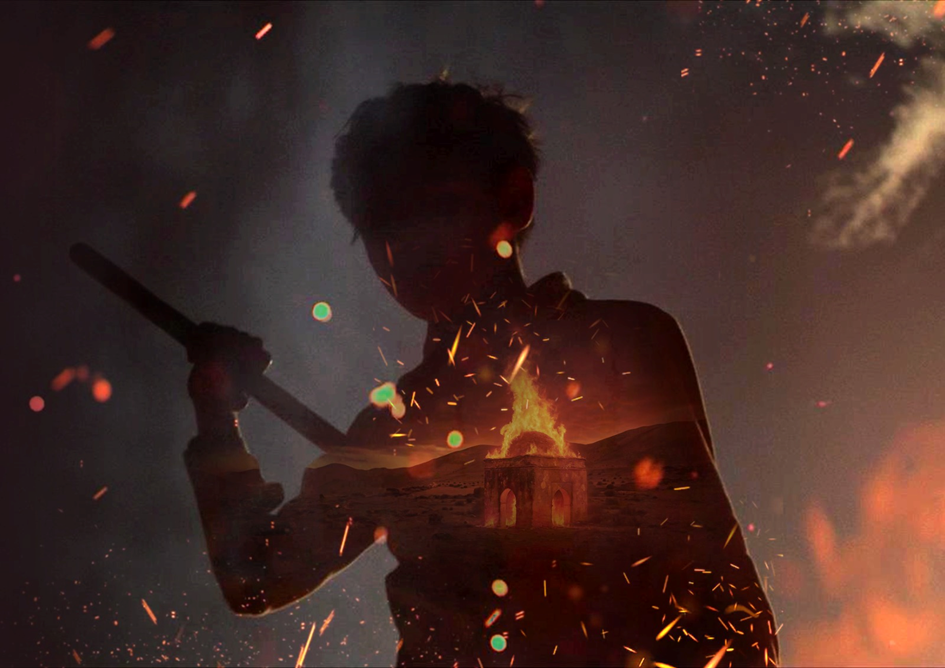
Auteur genre crossover — festival & co-production oriented
Scale: Mid-scale auteur feature
Road to Limbo follows the unlikely encounter between Rahal, a man on the run, and Taher, a child designated for a ritual sacrifice. Their escape unfolds across remote territories marked by ancestral beliefs, social fractures, and latent violence.
As they move forward, the journey becomes both physical and metaphysical. The landscapes they cross — villages, wastelands, thresholds, and ritual spaces — gradually blur the boundary between reality and the unseen world. What begins as a survival escape turns into a moral and spiritual passage where guilt, fear, and responsibility are constantly renegotiated.
Through their evolving relationship, the film builds a fragile space of protection and transmission, confronting inherited violence while opening the possibility of redemption
Road to Limbo is conceived as an initiatory road film rooted in Moroccan territories where ritual, belief, and contemporary violence coexist. The project explores the idea of suspension — between childhood and adulthood, crime and forgiveness, the visible and the invisible.
The encounter between Rahal and Taher is the emotional and ethical core of the film. Rather than treating sacrifice and belief as exotic elements, the film approaches them from within lived cultural and symbolic realities. The aim is to portray belief systems not as folklore but as active forces shaping decisions, fear, and hope.
The film seeks a cinema of tension and interiority, where landscapes carry memory and threat, and where silence, gestures, and presence are as important as dialogue. The road becomes a moral corridor — a space where a damaged adult and a threatened child negotiate the possibility of repair.
The mise‑en‑scène is built on sensory realism combined with moments of perceptual shift.
Rahal — A man on the run, marked by past violence and moral fracture. Initially driven by self-preservation, he is gradually confronted with responsibility toward the child. His arc moves from escape to ethical engagement.
Taher — A child designated for sacrifice, carrying both fear and symbolic charge. His presence transforms the adult world around him. He evolves from silent object of ritual to active moral mirror.
Invisible Forces (Social / Ritual / Institutional) — Not embodied by a single antagonist but by a network of pressures: belief systems, opportunistic authority, inherited fear structures.