
Feature Film — Political / Social
Status: Writing & Development — Script: Treatment Completed
Focus: Child trafficking & exploitation systems
Scale: Mid-scale auteur feature
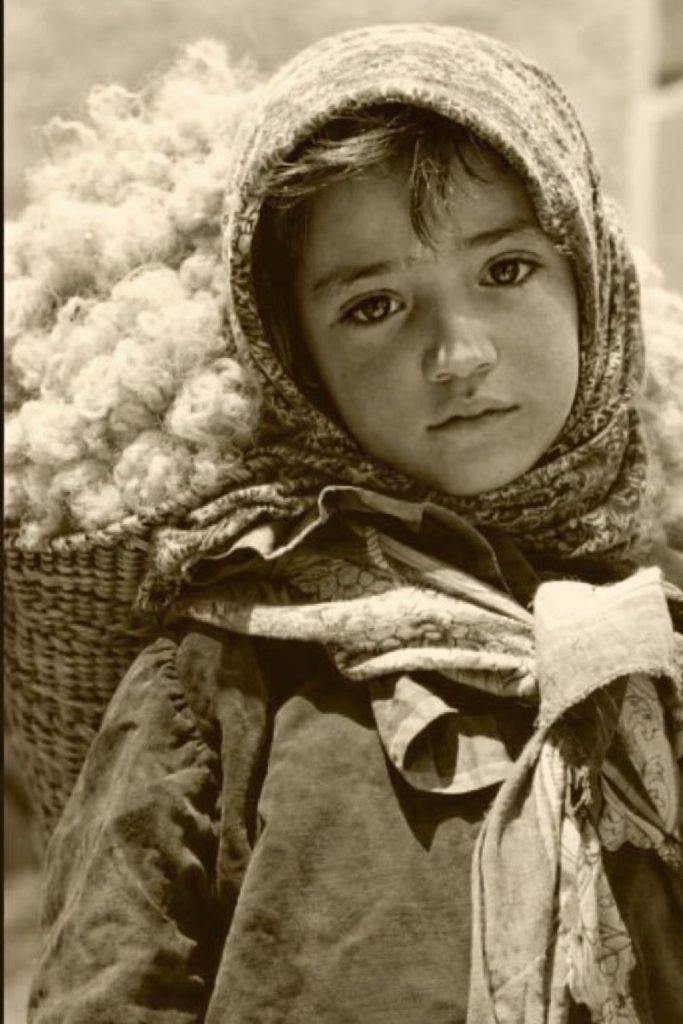
In a world where child labor has become a silent norm, a group of children lives and works inside a closed environment structured by invisible rules. Wool is everywhere — covering bodies, walls, and objects — creating an atmosphere that feels both protective and suffocating.
Through their intertwined trajectories, the film reveals an organized system of child exploitation and trafficking in which violence is not spectacular but structural, embedded, and everyday. Children of Wool explores the fragile boundary between survival, submission, and resistance, in a world where childhood itself has become an economic resource.
Children of Wool is conceived as a film about invisible systems — specifically the hidden economies of child exploitation and trafficking that operate behind normalized production chains. The project does not approach the subject through shock or spectacle, but through atmosphere, repetition, and material presence.
The omnipresence of wool functions as a central metaphor: a material associated with warmth and protection that becomes, in the film, a surface of confinement and erasure. The children are not reduced to victims; they are observed as thinking, adaptive, and resistant bodies navigating a constrained system.
The intention is to portray exploitation as an organized structure rather than a series of isolated abuses. The film focuses on mechanisms — recruitment, containment, productivity pressure, silence — showing how trafficking and forced child labor can become normalized and socially invisible.
The cinematic approach favors sensory immersion and ethical distance: no voyeurism, no sensational staging of suffering, but a rigorous attention to gesture, rhythm, and material conditions. The viewer is placed inside a controlled world whose logic progressively becomes legible and disturbing.