
Feature Film — Political / Memory
Status: Advanced Writing — Script: Advanced Draft
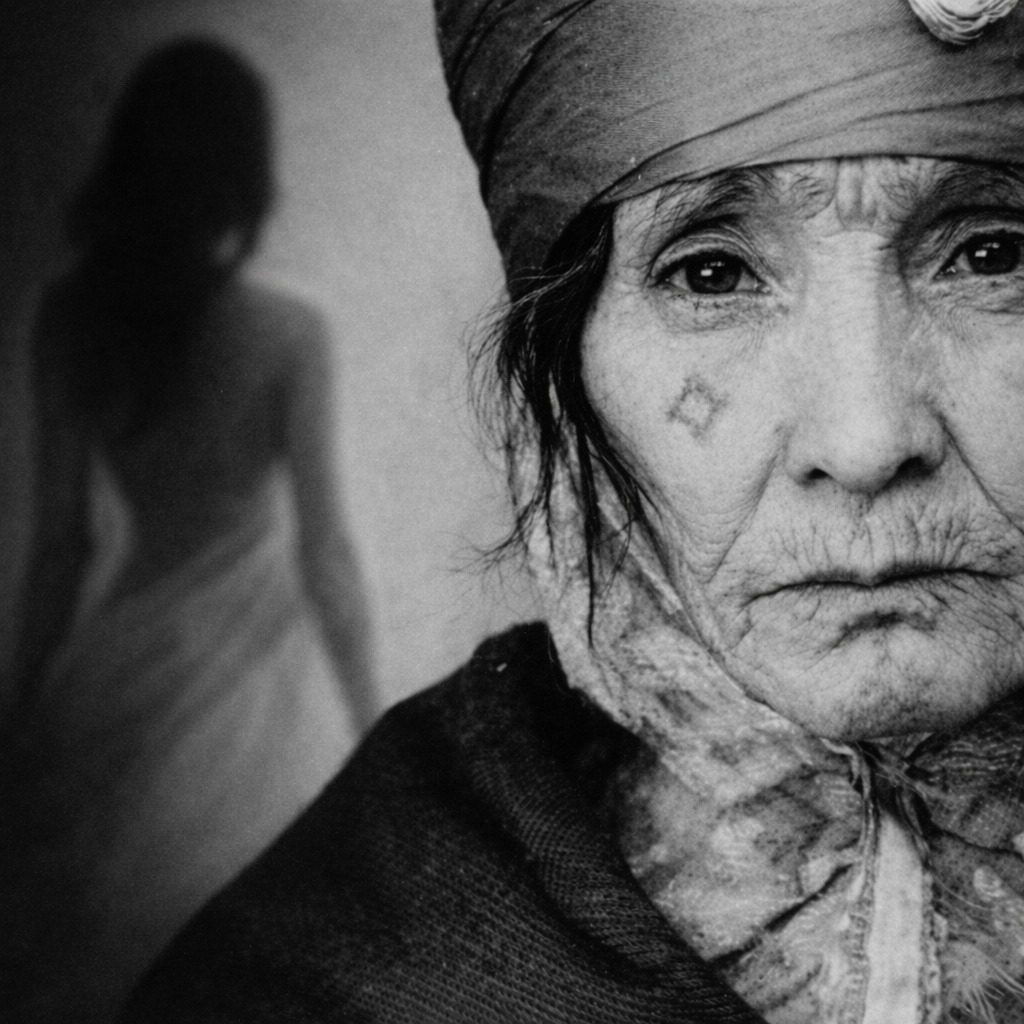
An investigation into erased colonial archives reveals a buried history of disappearance and institutional silence.
Scale: Mid-scale auteur feature
Many years after the colonial wars, a researcher begins tracing the fate of women who disappeared from official military and administrative records. Their names appear briefly, then vanish. Files are incomplete, testimonies fragmented, and institutional silence persists.
The inquiry leads to an elderly woman living in obscurity who agrees, reluctantly, to speak. Through her memories — partial, embodied, and emotionally charged — another history emerges: one of forced displacement, gendered violence, erased identities, and survival strategies.
As her testimony unfolds, the gap between written archives and lived experience widens. Contradictions surface, omissions become meaningful, and what was meant to be forgotten takes shape through fragments.
When institutional recognition is finally considered, time has already done its work. What remains is not repair, but transmission — the fragile act of restoring a voice where history organized silence.
The Ghost of Indochina is conceived as a film about absence — the absence of names, bodies, and voices erased by institutional history. The starting point of the project is not the archive itself, but its fractures: missing files, altered identities, silences organized as policy. The film approaches history through what resists documentation.
Rather than reconstructing events through classical historical drama, the cinematic approach is built on fragments, traces, and embodied memory. Testimony is treated not as proof but as living matter — unstable, emotional, and politically charged. The survivor’s voice is not illustrative; it is the narrative engine and moral center of the film.
The mise-en-scène favors sensory presence over reconstitution. Spaces, textures, aging faces, and pauses carry as much meaning as spoken words. What is not shown becomes as important as what appears on screen. The film works with thresholds — between document and imagination, between speech and silence, between archive and body.
This project continues a broader artistic exploration of memory, transmission, and symbolic repair. It aims to create a cinematic space where erased histories can be approached with rigor and sensitivity, without spectacle and without victimization, restoring complexity and dignity to invisible trajectories.
On the international level, the film speaks to broader postcolonial questions: who writes history, who disappears from it, and how cinema can become a site of counter‑memory.
Postcolonial memory cinema — festival & cultural funds oriented